Where Indian Spices Come From

The growing region is part of the flavour.

From cardamom in the Western Ghats to cumin and coriander grown in drier regions, Indian spices reflect different climates, soils, farming practices and post-harvest handling. This guide explains those differences without treating any one origin as an automatic guarantee of quality.

Explore the page
Where Indian Spices Come From — VAAHE spice guide

Spice-growing regions of India

Learn what different regions are known for and why two lots of the same spice may differ.

01

Kerala & the Western Ghats — cardamom and pepper

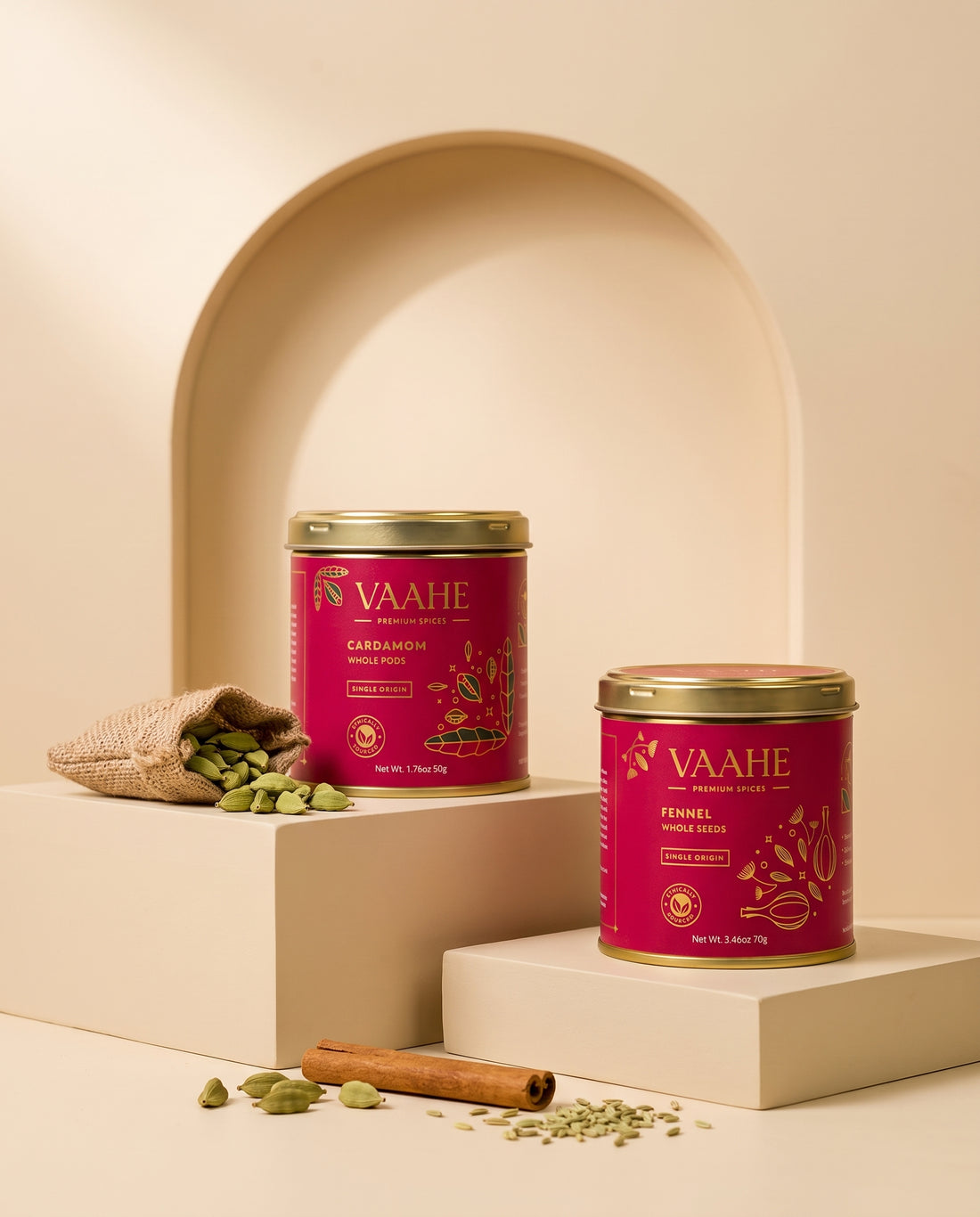
The humid hill regions of the Western Ghats are associated with green cardamom and black pepper. Elevation, rainfall, harvest timing and drying affect a spice's appearance and aromatic character.

Cardamom pods can vary in size and colour; check their aroma, condition and stated grade rather than relying only on an origin name.
02

Rajasthan & Gujarat — cumin and coriander

Semi-arid growing regions in western India are important for cumin, coriander and other seed spices. Variety, seasonal weather, cleaning and storage influence the final seed's condition.

For whole cumin or coriander, compare aroma, intactness and the amount of foreign material.

03

Kashmir and other chilli-growing regions

Chillies vary substantially in heat, colour and flavour. Kashmiri-style chilli is often used for colour and a comparatively gentle heat profile, but individual products and cultivars differ.

Check the specific chilli product's heat and colour characteristics rather than treating all red chilli powders as interchangeable.

04

Southern India — turmeric, chillies and other crops

Southern growing regions produce a variety of spices. The resulting ingredient depends on the cultivar, growing conditions, processing and grinding as well as its geographical origin.

For turmeric, origin is one consideration among many; freshness, specification, colour and appropriate quality checks matter too.

Explore spices by type

Browse VAAHE's whole spices, powdered essentials and blended Indian masalas.

Whole Spices

Whole Spices

For tempering, grinding or slow-cooked dishes, whole spices offer flexibility in the kitchen.

Explore collection ↗
Powdered Spices

Powdered Spices

Convenient ground essentials for daily cooking; store them tightly closed to preserve aroma.

Explore collection ↗
Blended Masalas

Blended Masalas

Spice combinations developed for particular dishes and regional flavour profiles.

Explore collection ↗

How origin informs our approach

A credible sourcing story should be specific about the ingredient and the information available.

01

Growing conditions shape the crop

Climate, rainfall, soil and elevation can contribute to differences in plant growth and the resulting harvest. Origin information is useful context, not a replacement for evaluating each batch.

02

Harvest and handling matter

How a crop is harvested, dried, cleaned and stored can alter its aroma, moisture and physical condition. These stages are relevant when considering whether material is suitable for spice processing.

03

Quality controls complete the picture

VAAHE's stated manufacturing process includes internal pre-processing COA checks and its batch-testing programme. The relevant product specifications and available records should support any batch-specific statements.

Learn more about the controls on our Quality & Testing page.

Explore VAAHE spices ↗

Questions about spice origins

Answers to practical questions about Indian spices.

Does the place a spice is grown affect its flavour?

Growing conditions, cultivar and post-harvest handling can contribute to differences in flavour and aroma. Individual batch quality still matters.

Is Kerala cardamom always better?

Kerala is a well-known growing region, but aroma, grade, condition, freshness and product specifications are important when choosing cardamom.

Where does cumin grow in India?

Rajasthan and Gujarat are major cumin-growing states. Exact product sourcing should be confirmed using supplier or batch information.

Are all VAAHE spices from one region?

Different spices naturally grow in different regions. Product-specific origin information depends on the sourcing records available for that ingredient.

Can I find out where a particular spice comes from?

Contact VAAHE with the product name and batch information to ask what sourcing details can be shared.